
Breast Cancer: Knowledge, Hope, and Healinge
At JRM Medical Center - Cancer Light Network, we believe that knowledge is power. Breast cancer is often spoken about with fear and silence, but it does not have to be this way. With early detection, effective treatment, and strong support systems, many people survive and live full, healthy lives.
Understanding Breast Cancer
Why This Matters
Our mission is simple: to bring light, knowledge, and healing to individuals, families, and communities affected by breast cancer in Cameroon, Africa, and beyond.
Globally
- Breast cancer is the most common cancer in women worldwide.
- In 2022, there were an estimated 2.3 million new cases and over 670,000 deaths (World Health Organization, WHO).
- Globally, 1 in 8 women will face breast cancer in her lifetime.
Source: WHO, Global Cancer Observatory (Globocan 2022).
In Africa
- Over 186,000 women are diagnosed with breast cancer every year across Africa.
- Close to 90,000 women die annually, with over 70% diagnosed at late stages (III–IV), when treatment is more difficult and survival is lower.
- Barriers include limited screening, lack of awareness, stigma, and inadequate treatment infrastructure.
Source: Globocan 2020; International Agency for Research on Cancer (IARC).
In Cameroon
- Breast cancer is the leading cancer among women, with about 4,000 new cases annually and nearly 2,000 deaths each year.
- Most women are diagnosed between the ages of 35 and 55, often only at advanced stages.
- Early detection and timely treatment remain a major challenge.
Source: Globocan 2020 (Cameroon Cancer Fact Sheet).
Our Promise to You
- Educate with clear, evidence-based, and easy-to-understand information
- Empower patients and families to make informed health decisions
- Support survivors, caregivers, and those currently undergoing treatment
- Guide health professionals with up-to-date clinical knowledge
- Advocate for access to care even in areas affected by conflict - because no woman should be left behind.
At Cancer Light Network, we believe no woman should face breast cancer alone - not even in times of crisis or displacement. With awareness, early detection, and compassion, we can save lives even in the most difficult circumstances.
What is Breast Cancer?
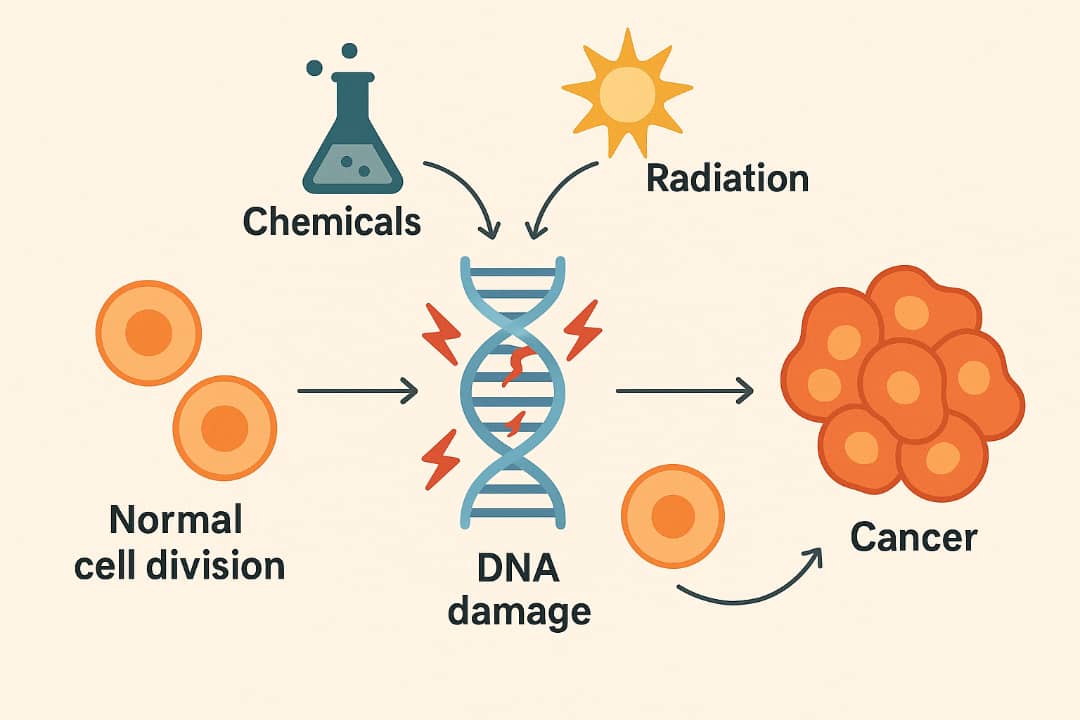
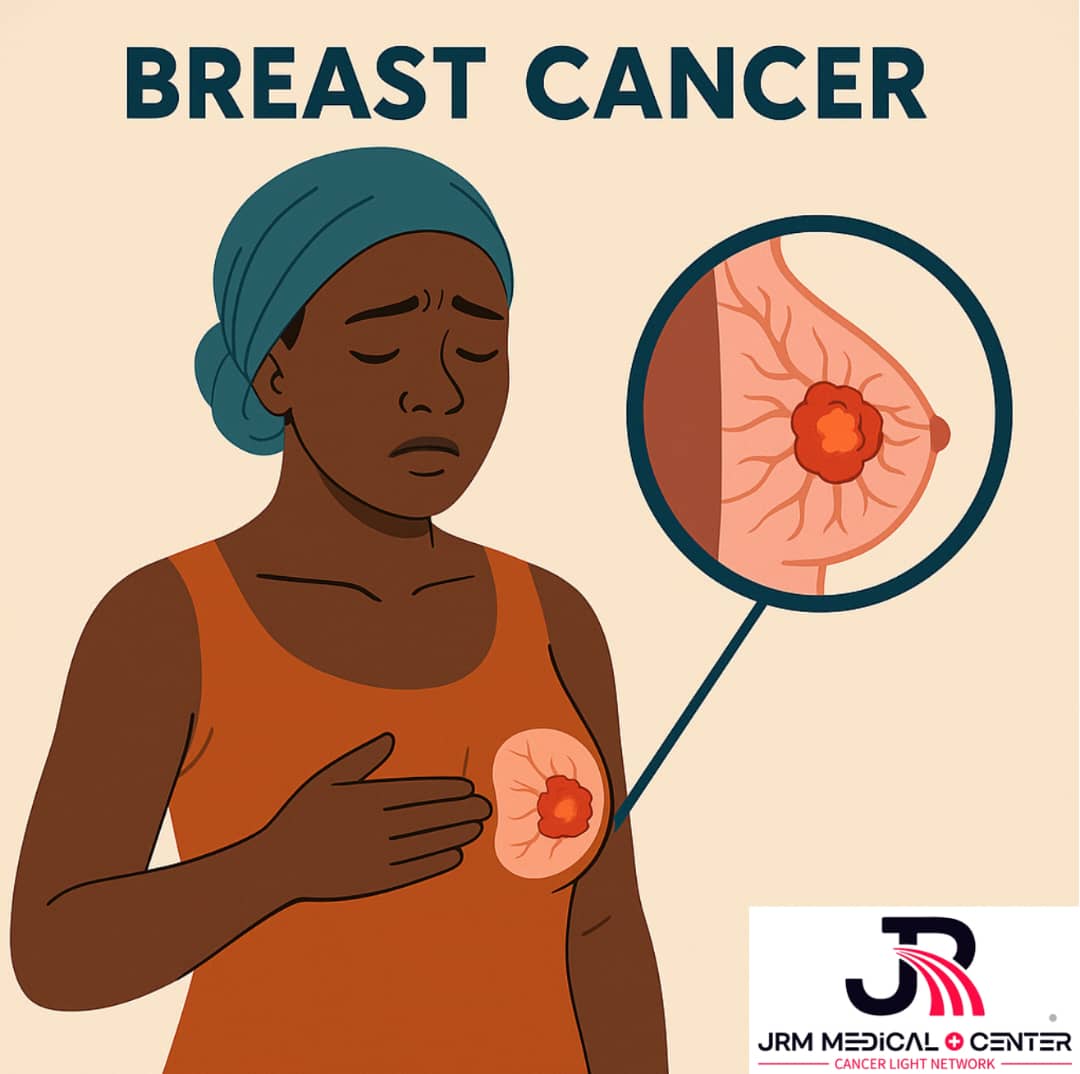
A Simple Explanation: Your breasts are made up of milk-producing glands (lobules), tiny tubes that carry milk (ducts), and supporting tissue (fat and connective tissue). Breast cancer happens when cells in the breast begin to grow out of control. Instead of following the body's normal rules, these cells multiply, form a lump or mass, and can spread (metastasize) to other parts of the body if not detected early.
The Basics
- Breast cancer is not one disease - there are different types
- Both women and men can get breast cancer
- Early detection saves lives
Common Types of Breast Cancer
Ductal Carcinoma In Situ (DCIS)
Early stage; abnormal cells in the milk ducts but not yet spread.
Invasive Ductal Carcinoma (IDC)
The most common type; starts in ducts and spreads to nearby breast tissue.
Invasive Lobular Carcinoma (ILC)
Starts in the lobules and can spread.
Triple-Negative Breast Cancer
More aggressive, harder to treat, more common in younger women and women of African ancestry.
Risk Factors and Prevention
Having a risk factor does not mean you will get breast cancer—it only means your chance is higher. Likewise, some people with no clear risk factors may still develop it. Awareness is power, because it helps us act early.
Major Risk Factors (Unchangeable)
- Being a woman - though men can also develop breast cancer
- Age - risk increases after 40
- Family history - breast cancer in a mother, sister, or daughter
- Genetics - inherited mutations like BRCA1 and BRCA2
- Personal history - having breast cancer once raises the chance
- Dense breasts - more glandular tissue makes detection harder
Lifestyle & Environmental Risk Factors (Changeable)
- Obesity and lack of exercise
- Alcohol consumption
- Smoking
- Unhealthy diet (high fat, low fruits/vegetables)
- Prolonged hormone replacement therapy (HRT)
- Radiation exposure
Prevention Strategies
While no one can fully prevent breast cancer, steps can lower the risk:
Know Your Breasts
Do regular self-exams and seek help if you notice changes.
Routine Screening
Mammograms (where available) or clinical breast exams save lives.
Healthy Lifestyle
Maintain a healthy weight, stay active, eat a balanced diet.
Breastfeeding
Protects both mother and child.
Early Signs and Symptoms
Common Early Signs
Check your breasts regularly and look out for:
- A new lump in the breast or underarm (most common sign)
- Changes in size or shape of the breast
- Unusual pain in the breast or armpit
- Swelling in part of the breast
- Nipple discharge
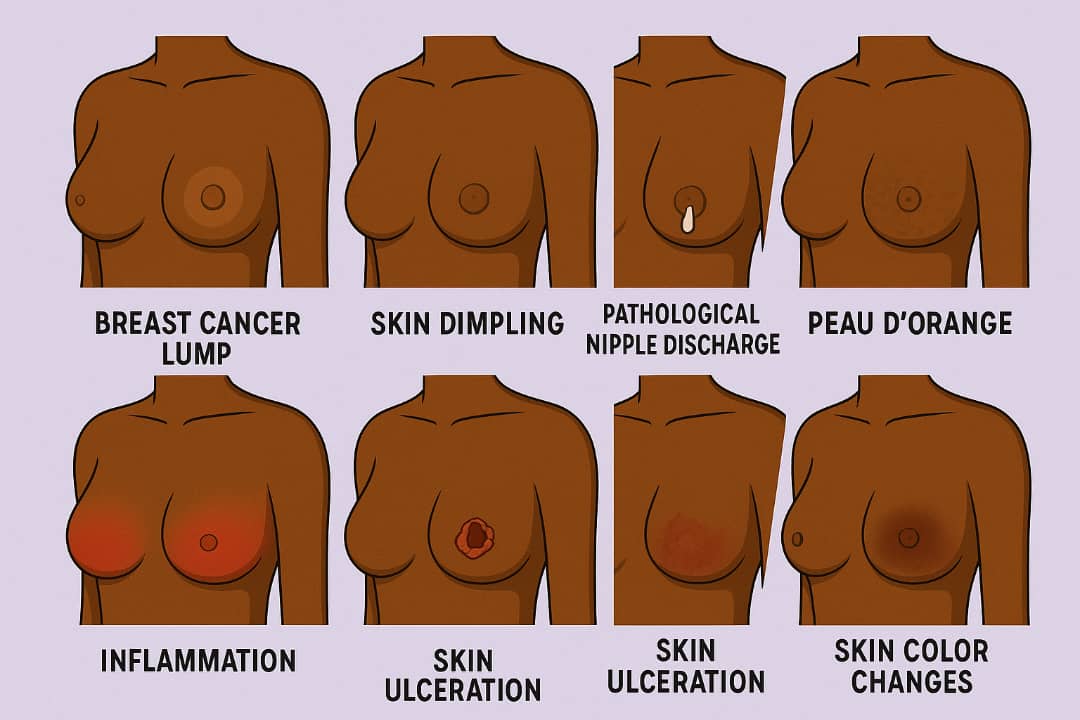
Visual Changes to Watch For
- Dimpling of the skin (like an orange peel)
- Redness or rash around the nipple or on the breast
- Pulling in (retraction) of the nipple or breast skin
- Nipple discharge, especially blood or clear fluid
- A sore or ulcer that does not heal
Patient Tip
Not all breast lumps are cancer. Many are benign (non-cancerous). But only a doctor can confirm this, so every lump or change should be checked.
Diagnosis and Staging
The Patient Journey: From Suspicion to Clarity
Step 1
Clinical Evaluation
Step 2
Imaging Tests
Step 3
Biopsy
Step 4
Lab Tests
Staging: Understanding "How Far It Has Gone"
Doctors use staging to decide treatment.
| Stage | Description |
|---|---|
| Stage 0 | Abnormal cells, not invasive (DCIS) |
| Stage I | Small tumor, no or limited spread |
| Stage II | Larger tumor and/or nearby lymph nodes involved |
| Stage III | Locally advanced; larger tumor, skin/chest wall involvement |
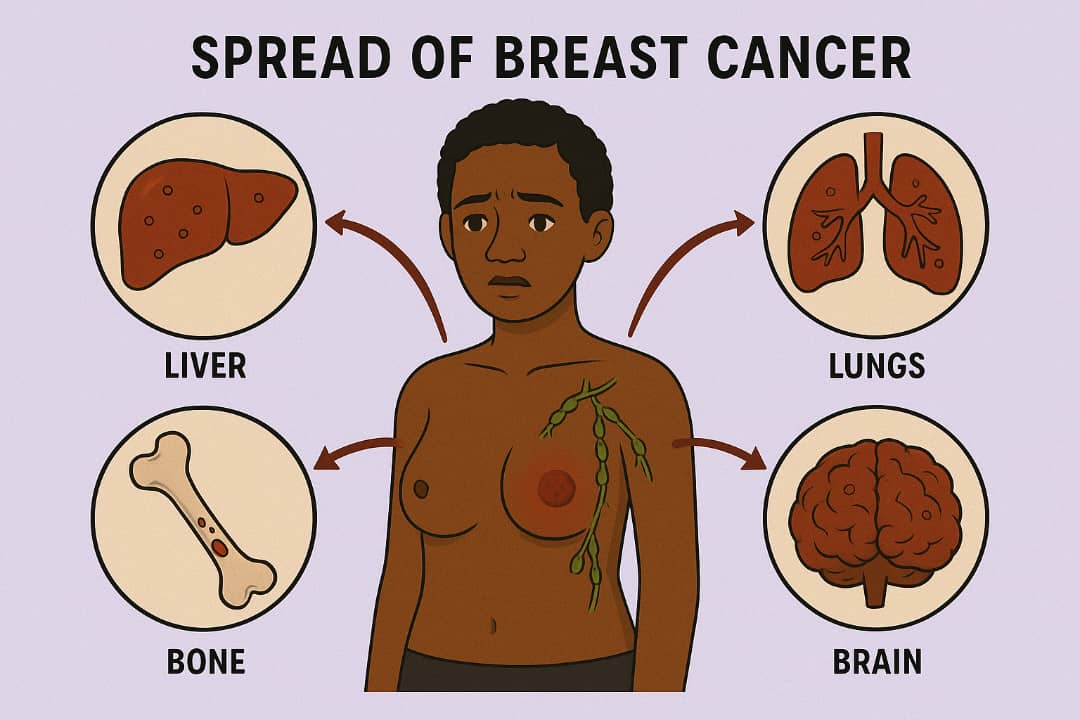
| Stage IV | Cancer has spread to distant organs |
Treatment Options
Main Types of Treatment
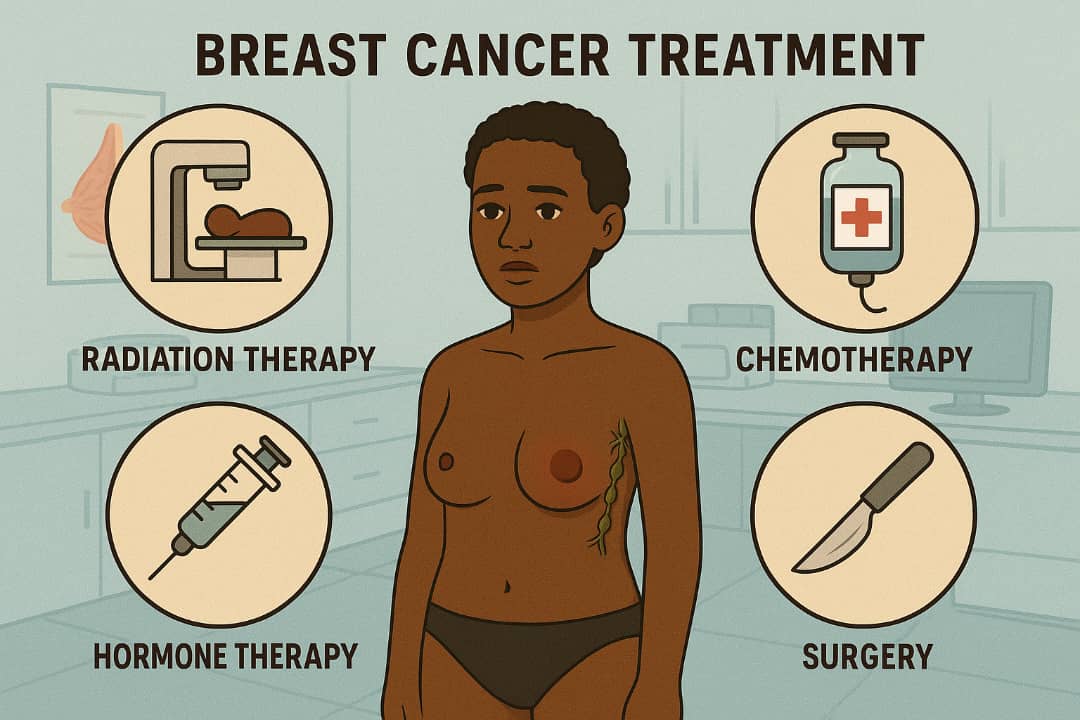
Surgery
- Lumpectomy (breast-conserving surgery)
- Mastectomy (whole breast removal)
- Lymph node surgery
Breast reconstruction may be done at the same time or later.
Radiation Therapy
High-energy X-rays target the breast area after surgery to kill any remaining cancer cells.
- Often used after lumpectomy
- Short sessions (5 days a week for several weeks)
Chemotherapy
Powerful medicines that destroy cancer cells.
- Used before or after surgery
- Common side effects: fatigue, hair loss, nausea
Hormone Therapy
For cancers that are estrogen or progesterone receptor-positive (ER/PR+).
- Tablets block hormones that fuel cancer growth
- Usually taken for 5-10 years
Combination Approach
Most patients receive a mix of treatments - for example:
- Surgery + Radiation
- Chemotherapy + Targeted therapy
- Hormone therapy + Surgery
Life After Treatment (Survivorship)
Physical Recovery
- Side effects fade with time
- Long-term care for heart, bones, or fertility issues
- Lymphedema management
Emotional and Mental Health
- Fear of recurrence is normal but manageable
- Support groups and counseling help
- Relaxation practices improve resilience
Healthy Lifestyle for Survivors
- Nutrition: More fruits, vegetables, whole grains
- Exercise: Regular physical activity
- No smoking
- Maintain healthy weight
Relationships and Intimacy
- Body changes may affect self-image
- Honest communication with partners helps
- Professional counseling available
Key Takeaway
Life after breast cancer is not just survival — it is about living fully, staying healthy, and finding joy again. With the right medical care, lifestyle choices, and support systems, survivors can thrive.
Common Myths and Truths about Breast Cancer
Myth 1: “Breast cancer is caused by witchcraft, curses, or punishment from God.”
✅ Truth: Breast cancer is caused by abnormal cell growth, not spirits or curses. Faith and prayer bring strength, but medical treatment is essential.
Myth 2: “Only old women get breast cancer.”
✅ Truth: Breast cancer can affect women at any age. In Africa, many patients are in their 30s and 40s. Men can also get breast cancer.
Myth 3: “If I have a lump, I should massage it or apply herbs to make it disappear.”
✅ Truth: Massaging or using herbs does not cure cancer. It may worsen the situation. Every lump needs medical evaluation.
Myth 4: “Surgery makes the cancer spread.”
✅ Truth: Surgery removes cancer and often saves lives. Delaying surgery increases the risk of spread.
Myth 5: “Chemotherapy and radiotherapy kill faster than cancer itself.”
✅ Truth: While treatments have side effects, they are temporary and carefully managed. Chemotherapy, radiotherapy, and targeted drugs are proven to extend and save lives.
Myth 6: “Breast cancer cannot be cured.”
✅ Truth: Many people are cured if diagnosed early. Even in advanced stages, treatment can control the disease and improve quality of life.
Frequently Asked Questions:
For Patients and Families
1. Can breast cancer be prevented?
Not completely, but risk can be reduced with healthy lifestyle choices: avoiding alcohol and smoking, exercising regularly, eating fruits/vegetables, breastfeeding, and going for screening.
2. Does breast cancer always cause pain?
No. Most early breast cancers are painless lumps. That’s why regular self-checks and screening are important.
3. Can men get breast cancer?
Yes. Though rare, about 1 in 100 breast cancer cases occurs in men. Men should also check for lumps, nipple discharge, or changes.
4. Will I lose my breast if I have breast cancer?
Not always. Some patients need mastectomy (removal), but others can have breast-conserving surgery. Advances in oncoplastic surgery allow safe removal of cancer while preserving or reconstructing the breast.
5. Is breast cancer hereditary?
Only about 5–10% of cases are due to inherited genes (like BRCA1/2). Most cases happen without family history. If your mother or sister had breast cancer, talk to your doctor about earlier screening.
6. Will treatment make me infertile?
Some treatments (especially chemotherapy) can affect fertility. Options like egg or embryo freezing may be discussed before treatment. Always ask your doctor early.
7. Does health insurance or government cover treatment?
This depends on the country. In Cameroon and many African nations, treatment costs are often out-of-pocket, but some NGOs and programs offer support. Always ask your care team about assistance options.
8. Can I live a normal life after breast cancer?
Yes. Many survivors return to work, raise families, and live long, healthy lives. Follow-up care and healthy living are key.
African-Specific FAQs
9. Can traditional medicine cure breast cancer?
No. Traditional remedies may help with comfort but do not remove cancer. Early hospital treatment saves lives.
10. Is breast cancer contagious?
No. You cannot “catch” cancer from another person.
11. Does prayer heal breast cancer?
Prayer brings strength and hope. Healing happens when faith is combined with proper medical treatment.
For Health Professionals
12. What is the recommended screening method for average-risk women in low-resource settings?
• Clinical Breast Exam (CBE) + Breast Self-Awareness remain practical.
• Mammography where available: start at 40–50 years, every 1–2 years.
13. When should genetic counseling/testing be considered?
• Strong family history (≥2 first-degree relatives with breast/ovarian cancer).
• Early onset (<40 years).
• Male breast cancer in family.
14. Best imaging for diagnosis in African settings?
• Ultrasound (widely available, cost-effective).
• Mammography (gold standard for screening, though limited in access).
• MRI for high-risk or complex cases (urban centers).
15. Common barriers to adherence in Africa?
• Cost of care, fear of mastectomy, stigma, reliance on traditional healers, transportation challenges.
Key Takeaway
No question is too small or shameful. Asking saves lives. Patients and families should feel free to ask their doctors anything, anytime.
Support, Resources & Contact
How JRM Medical Center Can Help You
Screening Services
Clinical breast exams, ultrasound, mammography
Diagnosis & Treatment
State-of-the-art care with compassion
Support Groups
Connect with others who understand your journey
Educational Programs
For patients, families, and health professionals